Radio cell inquiry
To understand this chapter, it is necessary to understand the basic concepts of the mobile network, in particular the connection and authentication process between mobile phones and cell-phone towers. We have attempted to illustrate this in the article Mobile communications.
Cell data is very easily accessible to the authorities and is regularly used in investigations“
Radio cell inquiry is a measure that law enforcement agencies regularly use in their investigations. Thereby, the authorities request phone cell data that is of interest to the case, usually directly from the mobile operators.

How to protect against radio cell inquiries?
Don’t let your phone connect to the radio cells. Ergo, turn your phone of, or at least, put it into airplane mode. With airplane mode, bear two things in mind:
- when you take out your SIM card, but don’t put your phone into airplane mode, it may still try to connect to cell-phone towers for making emergency calls.
- not all devices truly shut off cell-phone communication when put into airplane mode.
What is requested in radio cell inquiries?
Radio cell inquiries collect the following data for the period and “location” (i.e., a specific area that may be covered by several mobile phone cells) inquired about:
- Logged-in phone numbers
- Time stamps of:
- Dial-in/dial-out of devices
- Outgoing and incoming calls
- Voicemail messages
- Sent/received text messages
Radio cell inquiries are often made before, during, and after demonstrations. This can reveal which devices were present at the protest and were they were before and after it. This information can be potentially used to identify protesters, especially when their phone numbers are registered to their names or when the route they took to the demonstration can compromise their identity.
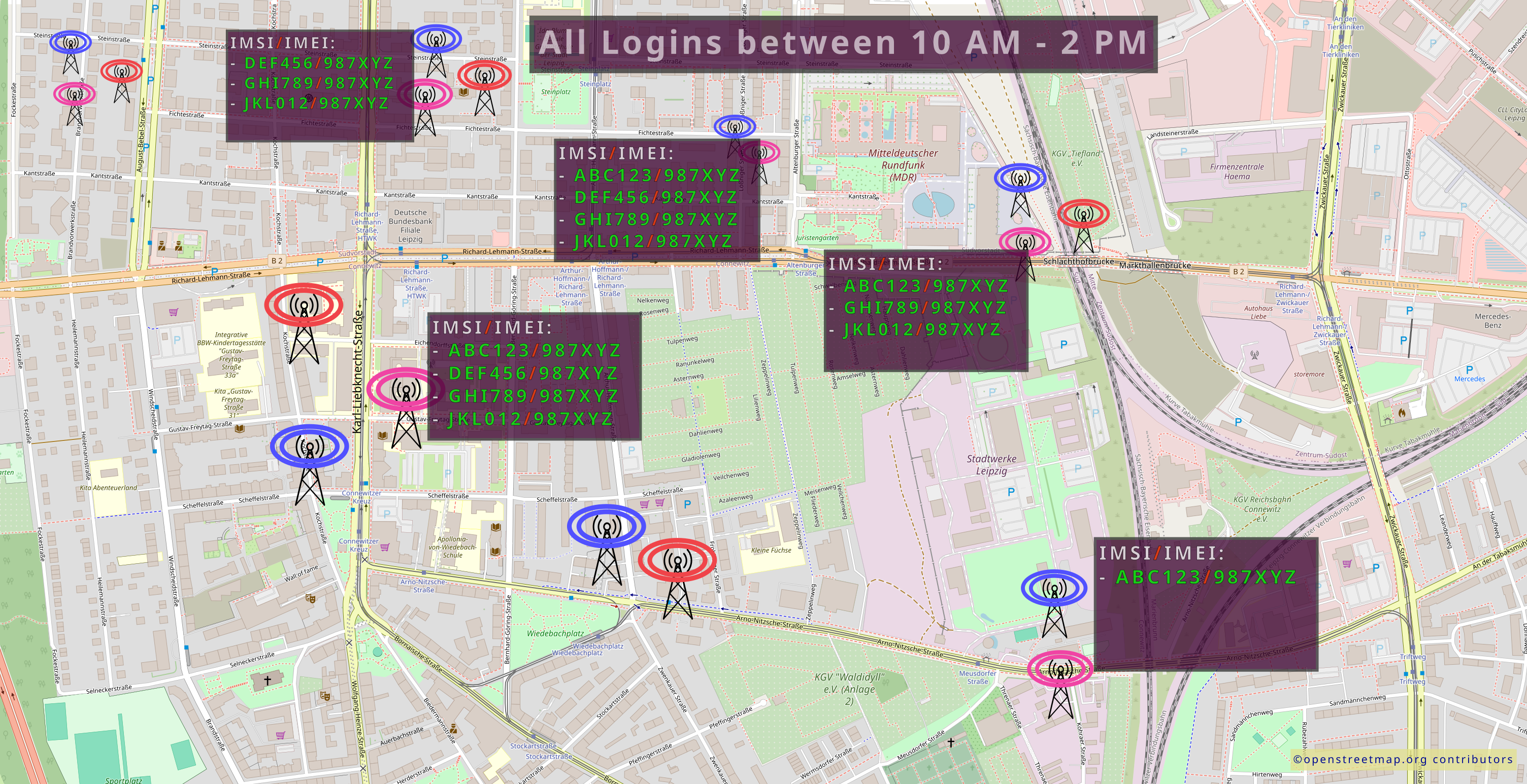
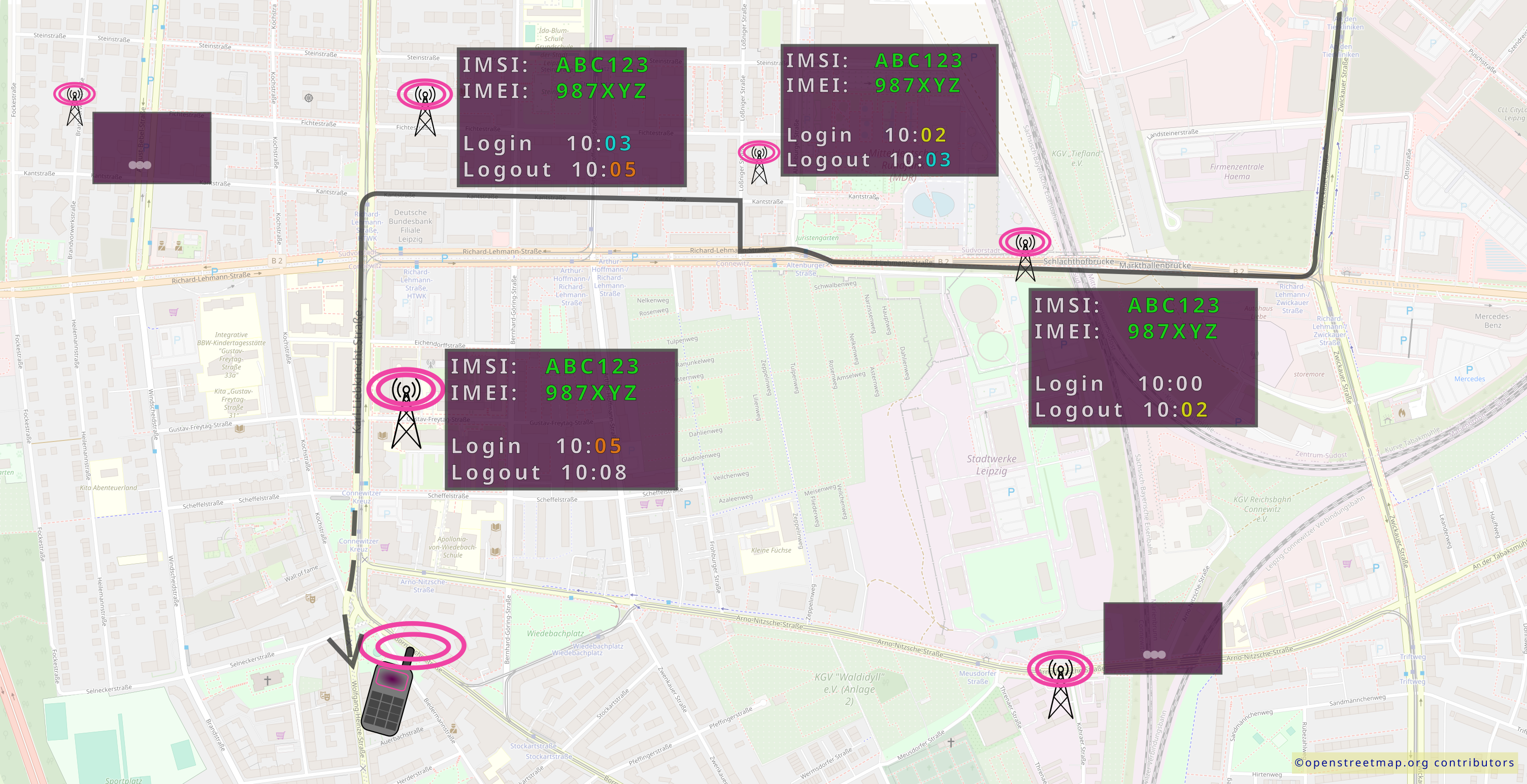
In addition, radio cell inquiries can be used to create movement profiles over a larger area by looking at the entry and exit times of individual devices at the respective mobile phone cells:
Statistics on radio cell inquiries
For almost all countries in the world we can assume that every single phone number ends up in a radio cell inquiry, at least every few days, if not multiple time every day. Statistics on the usage are available in Germany.
Feedback: You have feedback for esc-it.org? Feel free to use our short feedback form.